How to Stay Present in Conflict: The Skill Every Resilient Relationship Needs

Conflict is inevitable in relationships. Any strong, resilient friendship, romantic partnership, even colleague relations will often experience conflict at some point. Research highlights that conflict is not just a disagreement, but a dynamic, often emotional interaction, which can be productive (leading to growth) or destructive (leading to dysfunction). And it doesn’t always create disconnection on its own - what often disrupts connection is how we respond when we become emotionally activated. Avoiding conflict or confrontation shouldn’t be the goal, as that can often limit vulnerability, decreasing relational intimacy.
During moments of activation, our nervous system shifts quickly. We may feel overwhelmed, flooded, or unsure how to stay present. Active listening becomes difficult, old hurts may resurface, and in severe cases our brain/body connect may kick in and cause a shut down, quiet retreat, or lead us to become reactive, or respond in more agitated ways. Often these moments are misinterpreted. A pause can feel like withdrawal. Silence can feel like indifference. A change in tone can feel like escalation. Partners begin responding not to each other’s intention, but to what the behavior appears to mean.
But internally, many people are experiencing something different:
a strong hope to stay calm, connected, and coherent
a desperate desire to be fully heard and understood
the need to feel close to the people who matter most to us
Like any relational skill, this is a muscle that needs to be worked in order to strengthen the practice, and get the outcome we want.
Learning how to confront differences with care, awareness during difficult moments, and return to connection afterward is a skill set that supports more resilient, adaptable partnerships.
There was a post on Instagram recently I shared that discussed dysregulation and our need as humans to feel it through. It is SO important to not overuse therapy language that encourages the only goal being a place of perfect calm: protect your peace, you HAVE to be regulated before anything else, as if we are so fragile any minor inconvenience is too much to handle. While at times it’s funny and true that our animal brains and responses don’t make us feel very evolved, we are actually a very capable species overall (for the most part) ;).
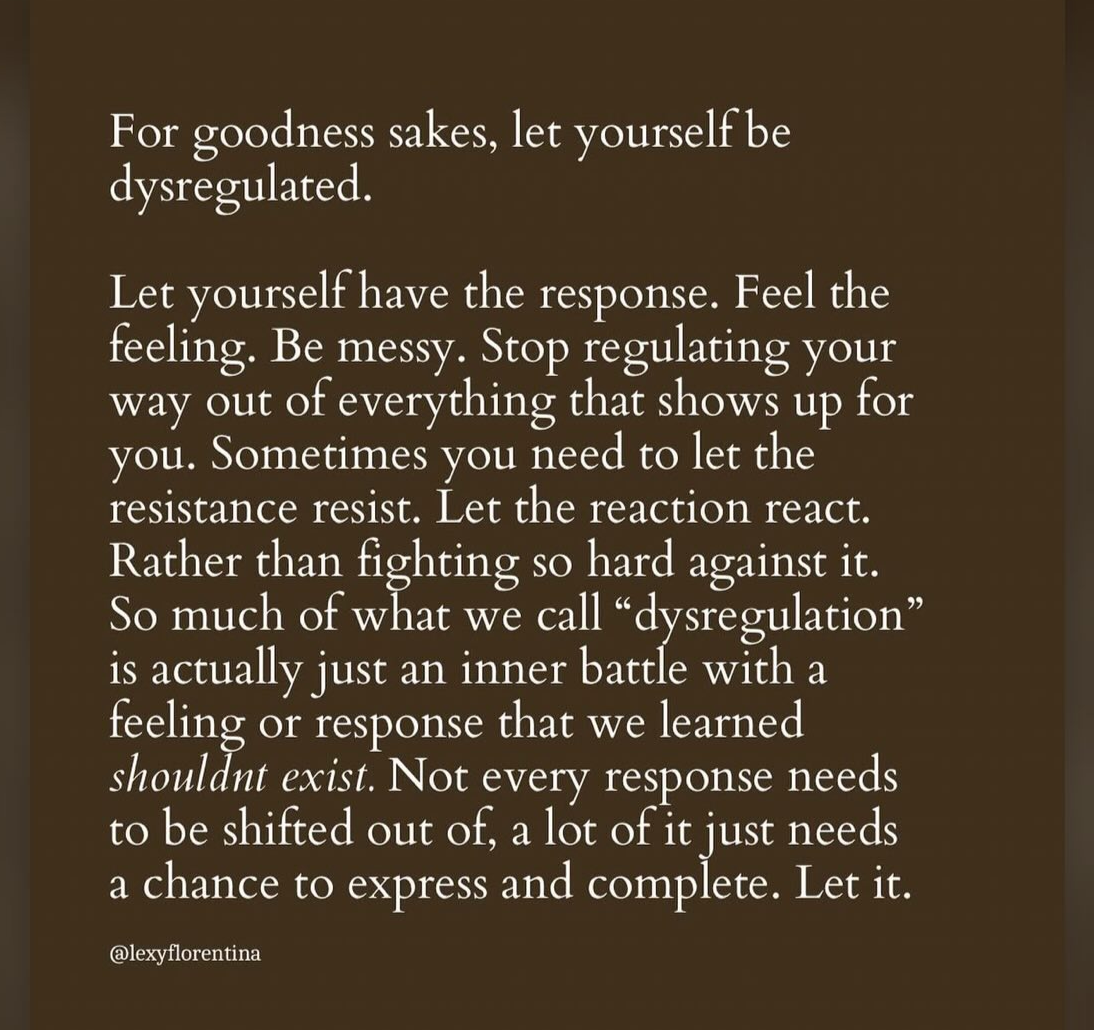
I love this quote from @lexiflorentina: “not every response needs to be shifted out of, a lot of it just needs a chance to express and complete”.
So how do we merge the two? Be dysregulated, in confrontation or conflict, feel overwhelmed – and move through it anyways. As usual, I made a worksheet for this practice!
This is where clear signaling with one another becomes important. Small, intentional cues, both verbal and nonverbal, can communicate: “I’m getting overwhelmed, but I’m still here with you.” These signals help reduce misinterpretation, maintain a sense of connection, and create enough stability to move through difficult moments.
Clear signaling is not about perfect communication or eliminating activation. It is about staying engaged during distress, even while our capacity is temporarily reduced. Brief signals of presence, effort, and intention can shift how an interaction unfolds. This communicates to ourselves and our relational connection “oh shit, we can handle really hard things, and still feel a sense of security”. This BUILDS relational adaptability, increasing closeness and deepening our connections.
The following worksheet offers simple ways to communicate during activation while maintaining connection, helping partners slow down, practice connecting during distressing moments, and stay engaged with one another. Use it during your next conflict, even though it may feel awkward at first - this effort has the ability to change the way we move through hard moments…inspiring our connections to flourish.
Check it out: CLEAR SIGNALING DURING RELATIONAL ACTIVATION
*Still feeling unsure and want professional support? Reach out below, we’re ready to help you build more capable, resilient partnerships.
